Walk into the benchmark, learn from the benchmark, and turn insight into action

From making equipment to designing connected industrial solutions

Shanghai Electric presents itself as a provider of green and intelligent industrial solutions, drawing on capabilities in energy generation and transmission, automation and equipment manufacturing. In its public strategy, the value proposition extends beyond the delivery of a machine: customers may also need system design, project execution, maintenance and performance over time. This makes the company a useful case for leaders asking how a product-centered organization can develop solution and service capabilities without losing its engineering foundations.


Energy transition is a systems challenge

The listed company's 2026 interim report identifies businesses covering nuclear, conventional power, wind, photovoltaic, hydrogen and energy-storage equipment, alongside grid and industrial power solutions. Shanghai Electric's group profile describes integrated “wind-solar-storage-hydrogen” and “generation-grid-load-storage” approaches. A study tour should therefore ask how diverse technologies fit a customer's actual operating conditions—not pretend that one technology or one factory represents the whole transition. Participants can compare the roles of equipment, control, project delivery and long-term operation using public cases and appropriately arranged discussions.


Extreme manufacturing, skilled people and the digital layer

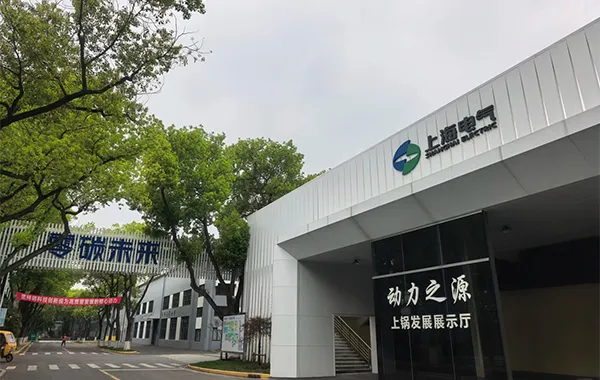
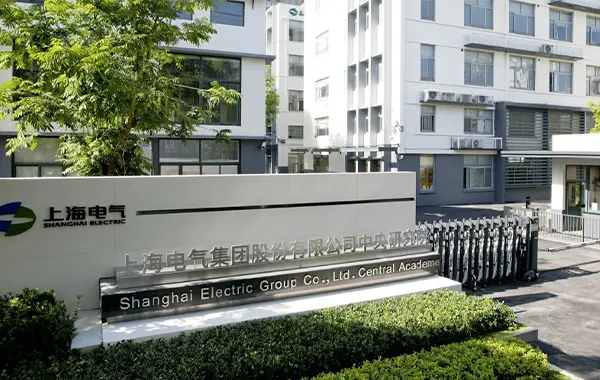
Large industrial equipment requires careful coordination between engineering specifications, specialized components, production, inspection and delivery. Shanghai Electric's public materials also place digital and intelligent systems alongside heavy manufacturing. A documented university group visited the company's Lingang heavy-equipment manufacturing base in 2023 and reported seeing exhibition spaces and an authorized production workshop. That visit illustrates a possible learning theme—how skilled manufacturing and digital tools meet—but it does not establish a generally open factory tour or guarantee access for a new group.


Shanghai Electric

Why choose this Shanghai Electric study tour?

Is your business thinking about these questions?

1. How can a manufacturer move from individual products toward solutions that solve a customer's full operational problem?
2. How should a diversified industrial group coordinate engineering, production and service across different business lines?
3. What does the energy transition require beyond adding renewable-energy equipment?
4. How can digital tools support quality, maintenance and decision-making without becoming an end in themselves?
5. How do we preserve deep technical skills while building new capabilities and a stronger customer-service mindset?


What can your team learn from Shanghai Electric?

The program treats Shanghai Electric as a case study in energy-system thinking, advanced equipment and manufacturing-to-service transformation. Participants work from the company's official profile and current listed-company disclosures. If an appropriate Shanghai Electric unit accepts a visit request, an authorized on-site exchange can deepen the learning. If not, a complete off-site case program remains possible, complemented by Shanghai's publicly described industrial-heritage route. The two modes must not be marketed as equivalent levels of factory access.


A comprehensive interpretation of Shanghai Electric through six learning dimensions:

1. Strategic portfolio and industrial synergies: Examine how energy equipment, industrial equipment and integrated services address related customer needs.
2. Integrated energy systems: Map the interfaces among generation, grids, demand, storage and relevant control technologies.
3. Advanced manufacturing and quality: Discuss the process discipline required for complex, high-value equipment; observe production only where the host explicitly permits it.
4. Digitalization and intelligent operations: Consider the role of data, monitoring and automation across production and equipment lifecycles.
5. Manufacturing-to-service transformation: Analyze how project delivery, operation and maintenance change the customer relationship.
6. Talent and cross-functional collaboration: Explore how engineering expertise, skilled craftsmanship and system-level coordination support long-term industrial competitiveness.


Shanghai Electric

The core features of the itinerary

1. A focused, conditional enterprise visit. We can seek a suitable briefing, exhibition or industrial-site visit from an appropriate Shanghai Electric business unit. A previous university visit to the Lingang heavy-equipment base provides evidence that organized visits have occurred, but not that the venue takes general bookings. Site choice, workshop access, speakers and photography require separate written approval.
2. A real Shanghai industrial context. The municipal government's Yangpu Riverside route includes the Yangshupu Power Plant Relics Park and other repurposed industrial spaces. The park's historical exhibition room has been described as accepting group reservations under published conditions, subject to reconfirmation before travel. This is a separate city-heritage visit, not a Shanghai Electric facility.
3. Learning across equipment and systems. Facilitated exercises connect a customer's energy or industrial problem with product selection, integration, delivery and lifecycle service, without relying on proprietary technical disclosures.
4. Structured review. Participants leave with a testable action plan rather than a collection of factory photographs: one customer need, one cross-functional improvement and a realistic pilot.

Itinerary planning (3 days, 2 nights classic plan; customizable)

Planning note: The itinerary is a proposal, not a confirmed Shanghai Electric-hosted event. No public visitor-booking channel for the Lingang base was verified during research. The company must confirm the host entity, date, site, permitted route, safety requirements, language arrangements and any technical speaker. Nuclear-related areas, workshops and laboratories must never be assumed accessible. If the visit is declined, the enterprise portion will be replaced with an off-site case workshop; city venues have their own booking rules.


Day 1: Shanghai Electric in context — industry, portfolio and customer needs

Morning: Arrive in Shanghai and open the program with an overview of Shanghai Electric's group positioning and the listed company's three reported operating segments. Each participant identifies a business challenge involving energy, manufacturing or the transition from product sales to solutions.

Afternoon: Facilitated case workshop—“From equipment supplier to system partner.” Map a hypothetical industrial customer's needs from planning through operation. Use public descriptions of energy and industrial offerings to distinguish what a manufacturer supplies from what a system integrator or service provider must coordinate.

Evening: Group discussion on the trade-offs between standardization, engineering customization, project risk and long-term service.


Day 2: Proposed enterprise exchange — Lingang advanced manufacturing

Morning: Travel to Lingang for a proposed host-approved Shanghai Electric visit. Request an appropriate exhibition or briefing on heavy equipment, manufacturing methods and the group's industrial development. If the host specifically authorizes workshop access, follow its designated safety and confidentiality route. Otherwise, conduct a facilitator-led session in a separately booked off-site venue. A 2023 university visit documented exhibition and production-area access for that particular group; it is not a standing offer to all visitors.

Afternoon: Optional, separately approved conversation with a technical, project or service representative on equipment lifecycle management, energy systems or manufacturing capabilities. If no speaker is confirmed, run a structured problem-solving exercise: trace a hypothetical equipment order from requirements and component supply to commissioning and maintenance.

Evening: Review—“Which capability makes a customer choose an integrated solution rather than a single product?” Record transferable practices and unresolved questions.


Day 3: Industrial heritage and a practical transformation plan

Morning: Visit the Yangpu Riverside industrial-heritage route. Where a group reservation is confirmed, include the Yangshupu Power Plant historical exhibition room; otherwise, explore publicly accessible sections of the riverside and its industrial landscape. Discuss how the city has repurposed former industrial sites while retaining visible traces of its manufacturing history. This cultural visit is independently arranged and has no implied affiliation with Shanghai Electric.

Afternoon: Closing workshop. Teams present a 90-day pilot covering one of three themes: a customer-centered solution bundle, a measurable energy-efficiency or operational improvement, or a digital service around installed equipment. Set owners, milestones and evidence needed to judge success. Transfer to the selected Shanghai airport or rail station in accordance with the final schedule.

 

Shanghai Electric

More optional learning modules (customized topics)

Modules may be combined, substituted or deepened based on the group's priorities and the confirmed scope of any enterprise exchange.

Module A: Energy-system integration and the customer problem

Theme: From a catalogue of equipment to a coordinated energy solution.

Content: Use the group's published multi-energy approach to map generation, grid connection, demand, storage and operational management; identify technical interfaces and commercial responsibilities; draft a solution brief for a realistic customer scenario.

Module B: Advanced manufacturing and engineering quality

Theme: Delivering complex equipment reliably.

Content: Examine the stages from specification to fabrication, inspection and delivery at a conceptual level. If a visit is approved, compare the case framework with what the host permits the group to observe. Finish with a process-control exercise relevant to participants' own industries.

Module C: From equipment delivery to lifecycle services

Theme: Creating value after commissioning.

Content: Analyze how engineering, maintenance and operational feedback change the business relationship. Define a simple service proposition, customer outcome metric and mechanism for learning from equipment use.

Module D: Digital tools for industrial operations

Theme: Deciding where data changes an operational decision.

Content: Identify one production or maintenance decision, the information required to make it better and the limits of automation. Discuss data governance and human review before designing a small digital pilot.

Module E: Shanghai's industrial transformation

Theme: Learning from both a contemporary industrial group and the city's manufacturing heritage.

Content: Pair the Shanghai Electric case with the separately organized Yangpu Riverside route and, if available, its group-booked historical exhibition. Compare the heritage of power generation with present-day questions about cleaner energy and industrial renewal, while keeping the two organizations and sites distinct.


Shanghai Electric

About us

IntoBusinessChina designs customized business visits and study journeys in China. We combine reliable company research, confirmed meetings where available, local industry context and structured reflection so that visiting teams can translate observations into useful action. A proposed Shanghai Electric visit is requested and scoped with the relevant host before the final itinerary is offered.